Study: Lifestyle Interventions Outperform Drugs Alone for Childhood Obesity
07/05/2026 / By Petra Stone

A new analysis published in JAMA Pediatrics found that behavioral and lifestyle interventions for adolescent obesity significantly reduced body mass index (BMI) and improved body composition compared to control groups, outperforming weight-loss drugs used alone, according to a report by Children’s Health Defense. [1]
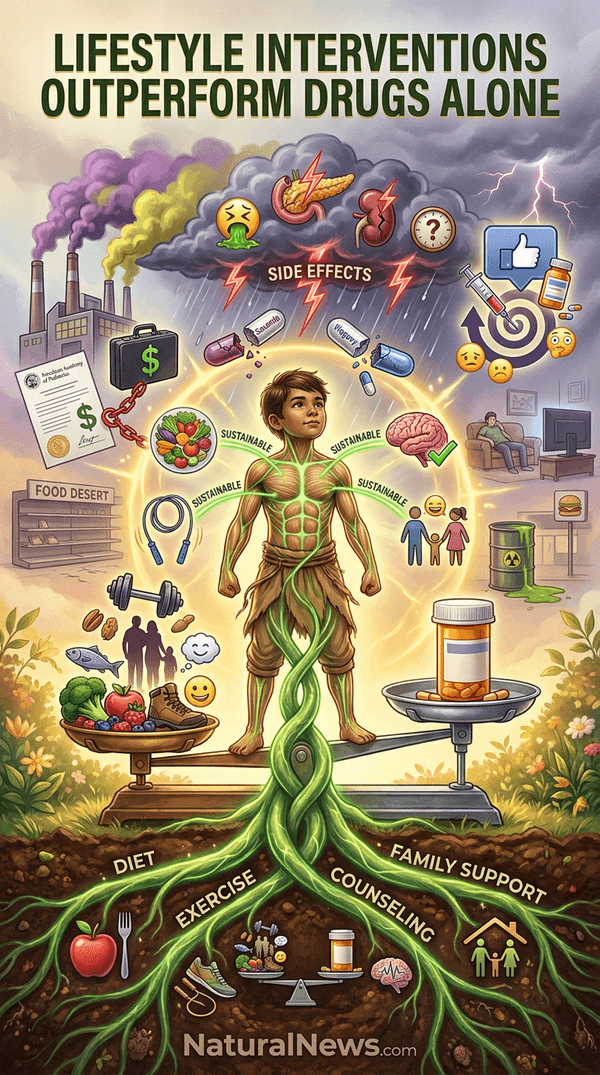
The analysis published June 22 also found that combining lifestyle treatment with medication produced the best results overall, but the authors cautioned that this conclusion rested on a single trial with few participants. [1] According to the authors, lifestyle treatment should form the backbone of any pediatric obesity treatment plan, even when medications are prescribed.
Study Details and Physician Critiques
The analysis reviewed multiple trials and found that lifestyle interventions preserved muscle mass, while medication-only weight loss often led to muscle reduction in children, a pattern also observed in adults. [1] The Committee on Nutrition of the American Academy of Pediatrics has previously estimated that for most obese children, lean body mass accounts for as much as 50% of the obese child’s excess weight, according to the book “Community Nutrition: Challenges and Opportunities.” [2]
Pediatrician Dr. Brian Thornburg said the paper emphasized drug outcomes in a way that overstates benefits while ignoring long-term health consequences of GLP-1 drugs, including effects on growth, puberty, bone health and potential lifelong dependency. [1] Dr. Michelle Perro, co-author of “What’s Making Our Children Sick?,” told The Defender that childhood obesity is more of an ecologic disease than a metabolic one, adding: “We cannot medicate our way out of an environment that is making our children sick.” [1]
In the United Kingdom, there are currently no anti-obesity medications licensed for use in children, according to the book “Front Matter” by Catherine Hankey, though restricted use in adolescents with severe obesity and comorbidities is sometimes offered under guidelines. [3]
Rise in Prescriptions and AAP Guidelines Under Scrutiny
GLP-1 drug prescriptions for children and teens jumped 38% in the first year after the American Academy of Pediatrics (AAP) issued guidelines in January 2023 recommending weight-loss drugs for obese children as young as 8, with some individual drug prescriptions rising 700%, according to a MedPage Today analysis cited by The Defender. [4][5]
A BMJ investigation in July 2025 uncovered undisclosed financial ties between the AAP and drug companies behind weight-loss medications, and found serious irregularities in the guideline development process based on weak or nonexistent evidence, The Defender reported. [5] The Food and Drug Administration approved Saxenda for children 12 and up in 2020 and Wegovy for the same age group in 2022, but long-term studies in youth populations are lacking. [6]
Drug makers have announced they are testing these products for children as young as age six, with Novo Nordisk reportedly already in phase three trials with children aged 6 to 12, according to a report by Children’s Health Defense. [6] Data from 2017 to 2020 shows that nearly 20 percent of children in America aged two to 19 are obese. [7]
Safety Concerns and Long-Term Unknowns
Adults and children taking GLP-1 drugs risk side effects including vomiting, diarrhea, pancreatitis, stomach paralysis and kidney disease. Weight regain is common after stopping, according to researchers. [8]
Dr. Claudia Fox, co-director of the Center for Pediatric Obesity Medicine at the University of Minnesota, acknowledged that long-term effects are unknown. “We don’t know what the long-term effects could be and that can be scary and unsettling,” she told the Wall Street Journal. [1]
A group of researchers at the University of California, Irvine, warned that young people’s exposure to weight loss drugs on social media, combined with teens’ proclivities toward risk-taking and the coming availability of the drugs in oral form will “create a perfect storm” for potential abuse. [8] Centers for Disease Control and Prevention data shows about 20% of U.S. children are chronically obese, and the JAMA authors emphasized that lifestyle treatment remains essential even when drugs are prescribed, warning against one-size-fits-all interventions. [9][1]
Conclusion
The findings from the JAMA Pediatrics analysis reinforce the importance of nutrition and exercise as first-line interventions for childhood obesity, according to the authors. [1] Critics argue that the focus on pharmaceutical solutions may divert attention from addressing environmental and dietary factors that contribute to the epidemic. The analysis underscores that lifestyle treatment should remain central to any pediatric obesity plan, even when medications are considered.
References
- Nutrition, Exercise Better Than Drugs Alone for Managing Obesity in Kids and Teens. Children’s Health Defense. June 30, 2026.
- Endres, Jeannette Brakhane. “Community Nutrition: Challenges and Opportunities.”
- Hankey, Catherine. “Front Matter.”
- Weight-loss Drug Prescriptions for Kids and Teens Soar Despite No Safety Data. Children’s Health Defense. [date not provided].
- Their Rubber Stamp Is Reckless’: After AAP Endorses Weight-Loss Drugs for Kids, Prescriptions Soar. Children’s Health Defense.
- Drug Makers Now Targeting 6-Year-Olds With Popular Weight-Loss Shots. Children’s Health Defense. October 25, 2023.
- Study shows ginger is a potent natural anti-obesity agent. NaturalNews.com. December 19, 2023.
- Weight Loss Drugs for Kids: A ‘Minefield of Health and Emotional Problems,’ Researchers Warn. Children’s Health Defense. Brenda Baletti, Ph.D. January 21, 2024.
- With 1 in 5 Kids Now Obese, Pharma Sets Sights on $50B Market for Weight-Loss Drugs. Children’s Health Defense.
Explainer Infographic
Submit a correction >>
Tagged Under:
adolescent obesity, Censored Science, childhood obesity, drugs, fight obesity, GLP-1 drugs, health science, lifestyle interventions, metabolic health, metabolism, natural, natural health, obesity, Ozempic, research, Wegovy, weight loss, weight management
This article may contain statements that reflect the opinion of the author
RECENT NEWS & ARTICLES